If you are working in a team on Oracle APEX applications, you already know one common problem.
- Someone changes a page.
- Someone else overwrites it.
- And suddenly things stop working.
This is exactly where Working Copy becomes important.
What is Working Copy in Oracle APEX?
In simple terms, Working Copy allows a developer to edit an application in isolation without directly impacting the main application. Instead of editing the live version, you create a private copy, make your changes safely, test properly, and then publish them when ready. It gives you control. And safety.
Where It Fits in Oracle APEX Architecture
Working Copy is available in newer versions of Oracle APEX
It works closely with:
- Application Builder
- Team Development
- Version control workflow
It is especially useful in multi-developer environments.
Why Working Copy is Important
1. Safe Development: You can experiment without breaking the main application.
2. Parallel Development : Two developers can work on different features at the same time.
3. Controlled Publishing : Changes are reviewed before being pushed to the main version.
4. Cleaner Deployment Process : Instead of exporting and importing constantly, development becomes structured.
How Working Copy Actually Works
Here is the practical flow most teams follow:
- Create a Working Copy of the application.
- Make page-level or component-level changes.
- Test everything.
- Compare changes with base version.
- Publish the Working Copy.
- Main application gets updated.
It feels similar to Git branches, but inside APEX.
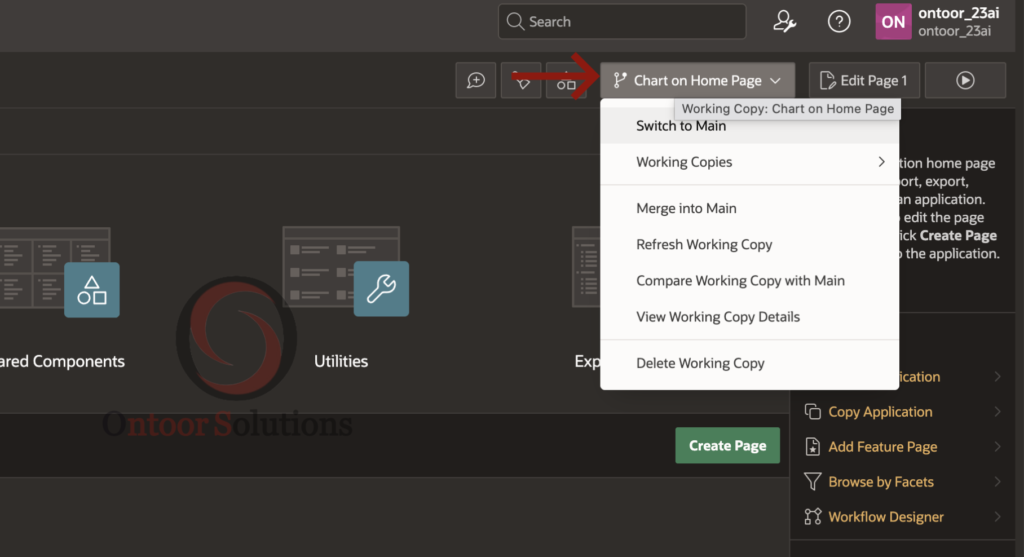
Creating a Working Copy
Steps:
- Go to Application Builder.
- Select your application.
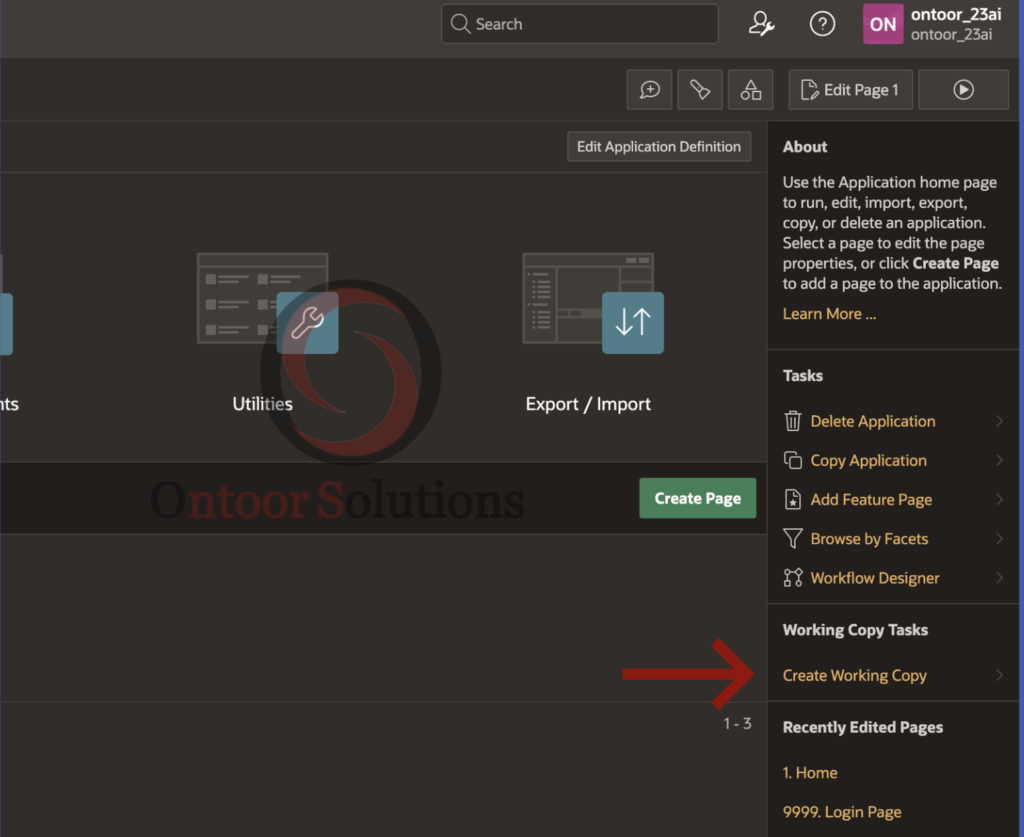
- Choose the Working Copy option.
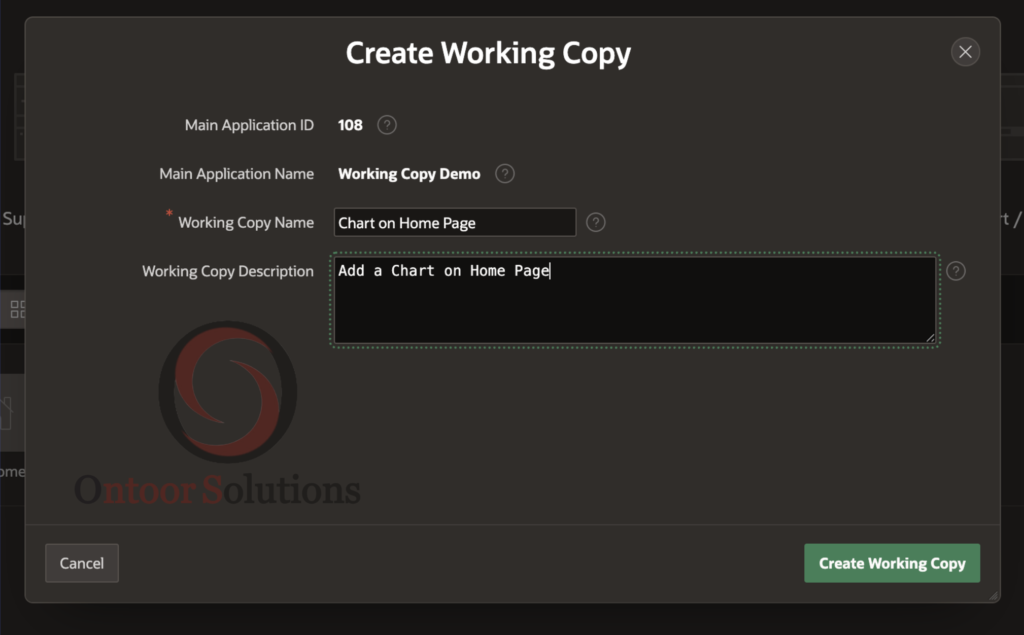
- Click Create Working Copy.
- Start editing.
That’s it.
Now you are working in isolation.
Working Copy vs Direct Edit
| Feature | Direct Edit | Working Copy |
|---|---|---|
| Safe from overwriting | No | Yes |
| Team friendly | Limited | Strong |
| Rollback ability | Difficult | Easier |
| Suitable for large changes | Risky | Recommended |
For small quick fixes, direct editing is fine. For major features, always use Working Copy.
Real Project Scenario
Let us say your team is:
- Upgrading from APEX 5 to APEX 24.1
- Refactoring old pages
- Adding new APIs via ORDS
- Redesigning UI
If you do this directly on main application, risk is high. Working Copy allows:
- Gradual refactoring
- Safer testing
- Structured publishing
Especially useful in enterprise environments.
Things to Be Careful About
Working Copy is powerful, but keep these points in mind:
- Always communicate before publishing.
- Avoid keeping long-lived working copies.
- Review differences carefully before merging.
- Maintain naming conventions if multiple copies exist.
Discipline matters more than the feature itself.
Best Practices from Experience
From practical project environments:
- Create working copy per feature, not per developer.
- Publish in smaller logical batches.
- Test authorization and security again before publishing.
- Use clear comments in Team Development.
When Not to Use Working Copy
- Single developer small application.
- Very minor label change.
- Quick production hotfix (if process allows).
Use it wisely, not blindly.
Read about Merging and Refreshing the Working Copies
Final Thoughts
Working Copy in Oracle APEX brings structured development inside the platform itself. If you are building serious enterprise applications, this is not optional. It is necessary. It reduces conflict. It improves stability. It increases confidence during deployment. And if your team is growing, you should start using it early.