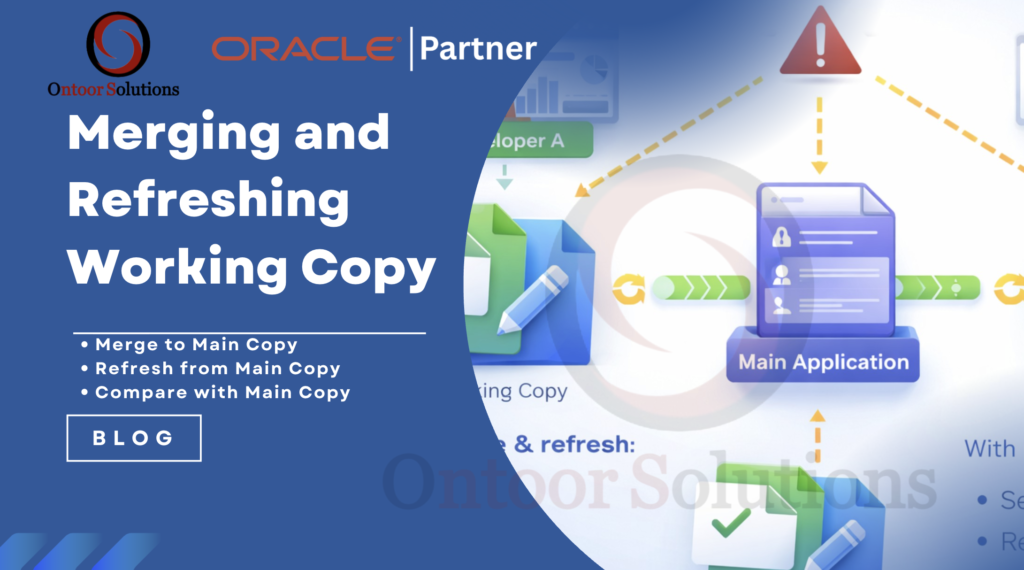
Creating a Working Copy is only half the story. The real discipline comes when you bring changes back to the main application or align your copy with updates done by…
If you are working in a team on Oracle APEX applications, you already know one common problem. Someone changes a page. Someone else overwrites it. And suddenly things stop working.…
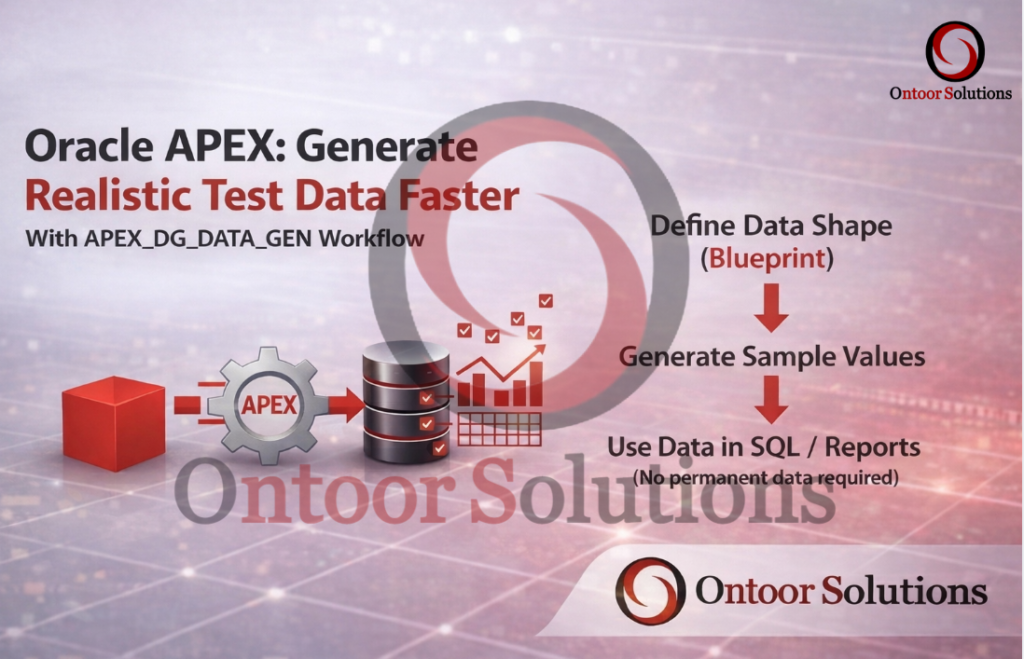
In almost every Oracle APEX project, developers face the same early challenge: The application UI is ready, but tables are empty QA teams ask for realistic data to test reports…
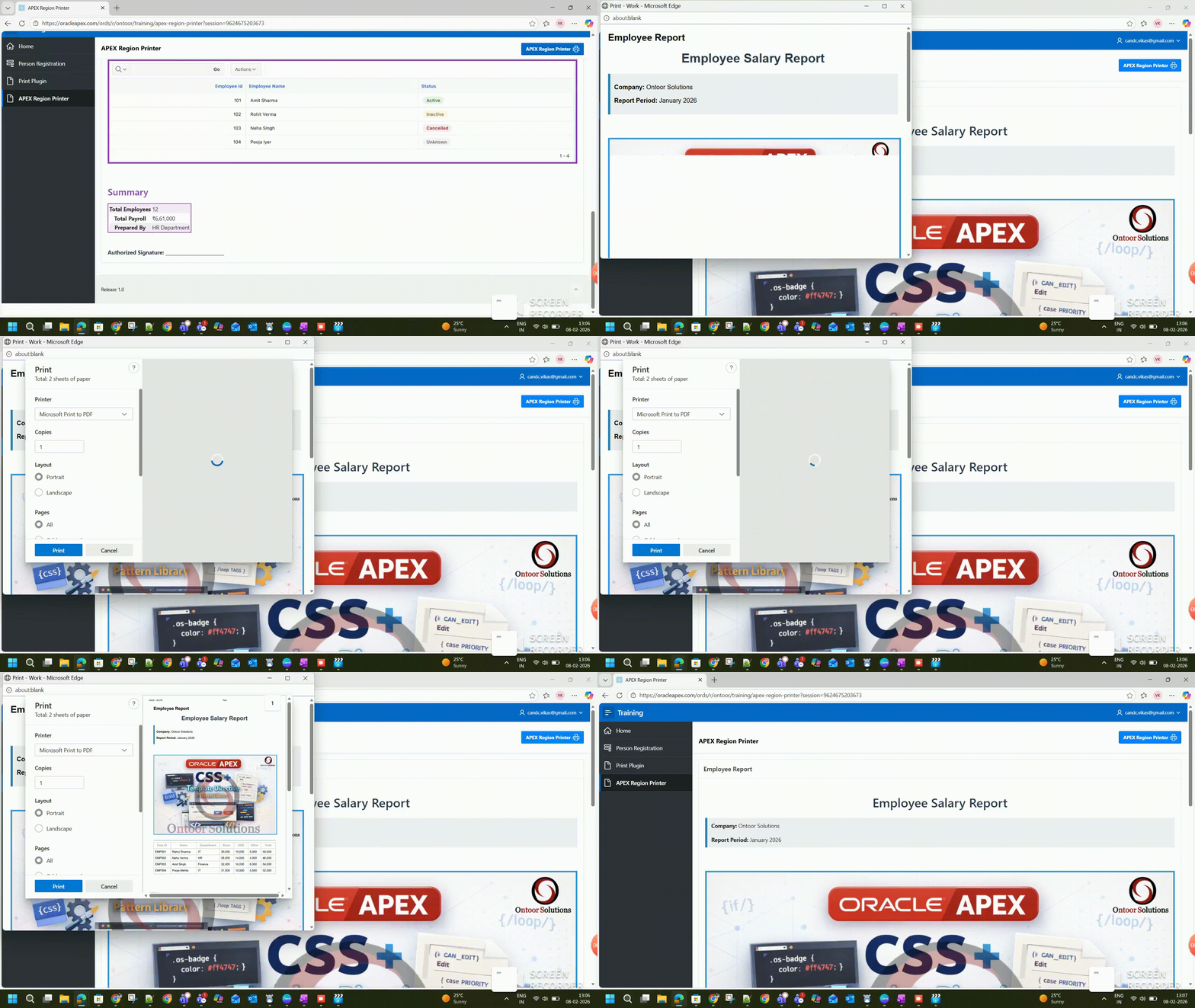
Printing in Oracle APEX has always been a tricky area. Most applications end up printing the entire page, including navigation menus, headers, buttons, and unwanted UI elements. This becomes a…
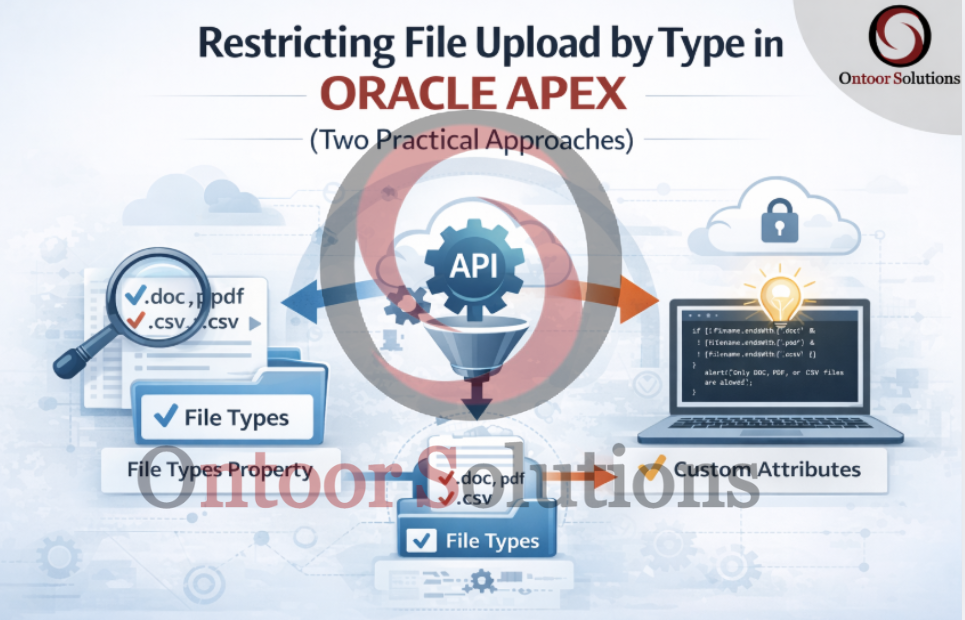
In ORACLE APEX 24.2, restricting file uploads is more structured and declarative than in earlier versions. You now have two clean approaches to control allowed file formats. Let’s understand both…
Previous Blog. Below is a ready-to-use CSS + Template Directive pattern library you can drop into any Oracle APEX application. This is meant to be practical, consistent, and team-friendly. No…
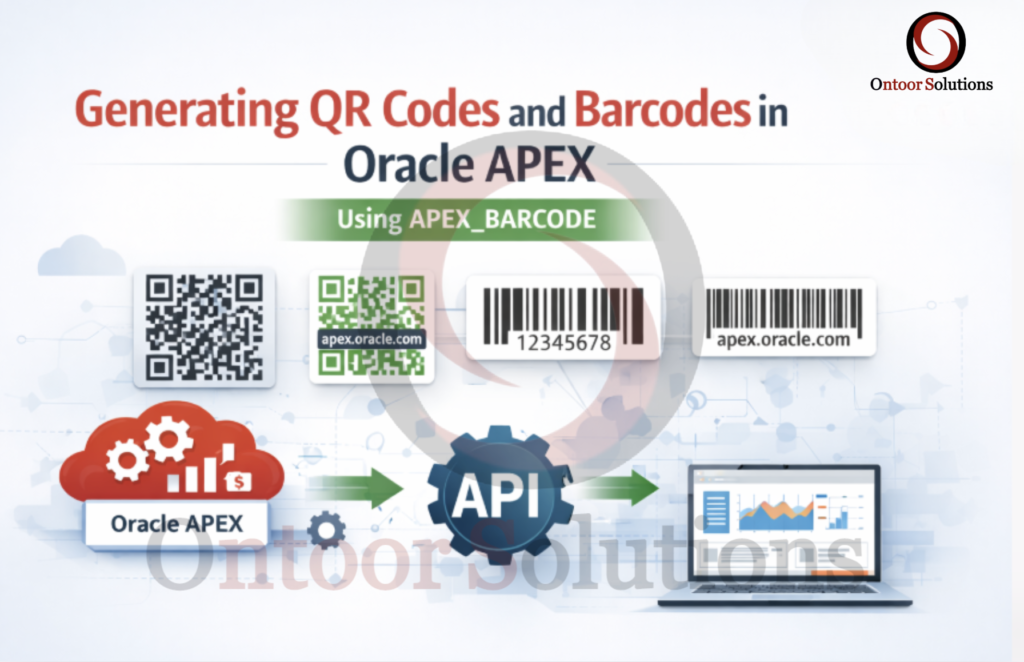
Modern enterprise applications frequently require QR codes and barcodes—whether for invoices, inventory tracking, secure navigation, or reporting. Oracle APEX provides a built-in package called APEX_BARCODE, which allows developers to generate…
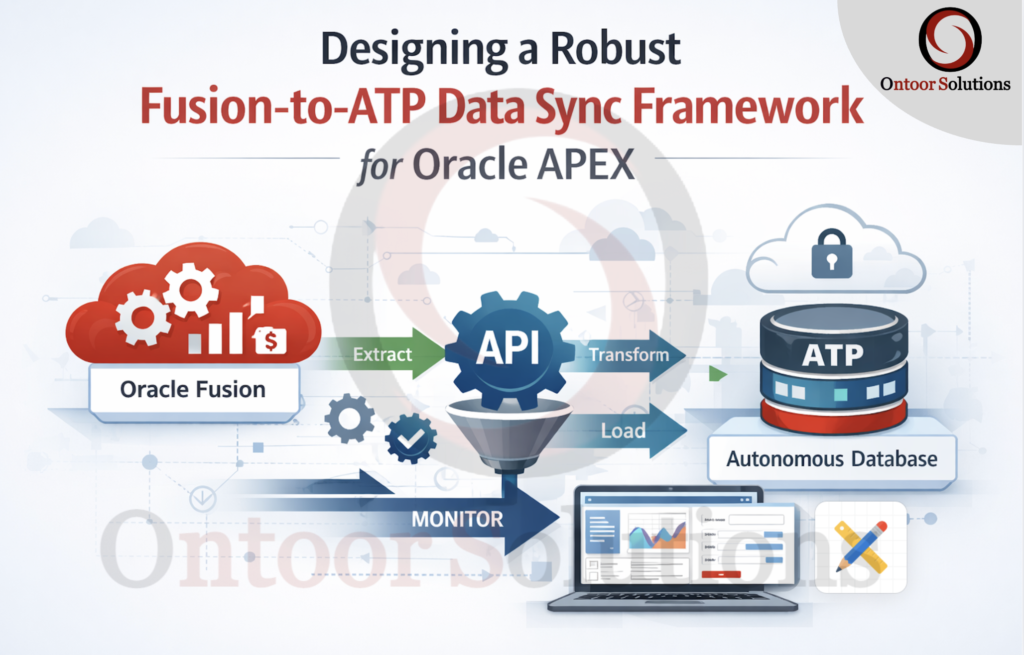
A complete, real-world, file-based integration architecture Introduction Oracle Fusion Applications store very important and sensitive business data. However, they are not meant to be accessed directly by custom applications or…
Usage, Real-World Fit, and Feature Comparison In the last few years, PostgreSQL has moved from being “just another open-source database” to a serious enterprise-grade option. Many teams that traditionally depended…
How They Help You Control Dynamic Content In Oracle APEX, many template-driven attributes support Template Directives. These are special tokens you can place inside HTML expressions (or templates in cards,…